


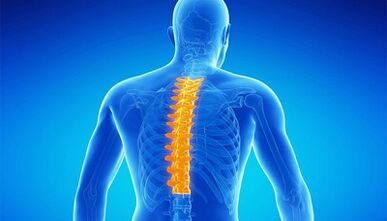
Osteochondrosis of the lumbar spine is a common disease that reduces a person's quality of life and is one of the causes of disability.
The pathology is more common in people over 40 years of age, is characterized by gradual progression and therefore requires adequate conservative or surgical treatment.
Mechanism of development
The main mechanism for the development of osteochondrosis is a violation of the nutrition of the cartilage tissue of the spinal structures.
The disease includes several pathogenetic relationships:
- Dystrophy of cartilaginous tissue due to malnutrition is the main triggering factor of the pathology.
- Degeneration (damage and destruction) of spinal cartilage (intervertebral discs, articular surfaces of spinal processes).
- An inflammatory reaction with tissue swelling, blood stasis and pain.
- A change in the ratio of the anatomical structures of the lumbar spine (flattening of the intervertebral discs with a decrease in their height), which leads to a decrease in the diameter of the openings between the vertebrae through which the roots of the spinal cord pass.
- Pressing the nerve fibers at the roots of the spinal cord, which leads to disruption of the passage of impulses and the subsequent development of the corresponding neurological symptoms.
Changes in cartilaginous components develop gradually over a long period of time.Timely initiation of preventive and therapeutic measures allows to slow down the progression of the disease.
Reasons
Osteochondrosis of the lumbar spine is a polyetiological disease that develops due to several reasons:
- Hereditary predisposition that determines at the genetic level the nutritional characteristics of cartilage tissue.
- Diseases of the endocrine, digestive and cardiovascular systems.
- Inflammatory autoimmune diseases affecting the joints of the spine (rheumatoid arthritis, systemic lupus erythematosus, rheumatism).
- Metabolic disorders in the human body.
- Systematic heavy physical work with increased load on the spine, lifting weights.
- Previous injuries to the spine, especially in the lumbar region (the cause of the violation of the connection of the components of the vertebrae with subsequent provoking the development of dystrophy and degeneration).
- Congenital anomalies or defects of the spine.
Awareness of the negative impact of the cause is more possible against the background of the following risk factors:
- Increased weight, which increases the load on the spine.
- Long-term systematic stay of the human body in an upright position.
- Incorrect posture.
- Hypothermia, including local in the back area.
- Systematic exposure to stress, lack of sleep, irrational mode of work and rest.
Knowing the causes and risk factors will allow the implementation of effective preventive measures.
Symptoms of lumbar osteochondrosis
The possible development of osteochondrosis is indicated by the appearance of the following characteristic symptoms:
- Pain in the lumbar region, which initially appears when the load on the spine increases.After that, it becomes constant, has a pulling or painful character and gradually intensifies.
- Irradiation of pain in the leg on the side of the pinched root of the spinal cord.
- Increased tone (tension) of the back muscles in the lumbar region.
- Decreased muscle strength in one or both legs.
- Periodic "shooting" pain in the back, provoked by local hypothermia and physical exertion.
- Loss of sensation in the skin of one or both legs, which is accompanied by tingling and numbness.
- "Cold feet" - the skin becomes cold to the touch due to spasm of arterial vessels, which is caused by compression of the autonomic nerve fibers of the spinal roots.
- Disturbed sweating - the skin of the legs becomes dry or, on the contrary, sweating increases.
- Peeling of the skin in the area of sensitivity disorder caused by a violation of autonomic innervation.
Osteochondrosis is a chronic disease.Clinical symptoms develop gradually over a long period of time.Periods of improvement (remission) are followed by an exacerbation of the pathology, which is accompanied by increased clinical symptoms.After exposure to a provoking factor (hypothermia, physical and emotional stress, stress), a sudden acute increase in pain is possible, provoked by an inflammatory reaction and swelling of the soft tissues in the region of the spinal roots.
Depending on the predominant symptoms, several clinical forms of the disease are distinguished:
- Lumbodynia is periodic paroxysmal pain in the lower back that develops after exposure to provoking factors.
- Lumboischalgia – pain occurs in the lower back and radiates to the buttocks or legs.
- Radiculitis is a pathological process accompanied by compression of one or more roots, while the clinical picture is dominated by neurological symptoms, including impaired skin sensitivity and reduced muscle strength.
- Radiculoischemia - compression affects the arterial vessels and severe movement disorders develop.
Each clinical form of osteochondrosis does not develop in isolation;they are usually combined with each other.As it progresses, the person's condition worsens.Severe destruction of cartilaginous structures can lead to disability.
Diagnosis
The diagnosis of osteochondrosis of the lumbar spine is based on visualization of changes in the vertebrae, intervertebral discs and soft tissues.
For this purpose, several instrumental research methods are prescribed:
- Radiography is a technique that allows you to visualize gross changes.It has become widespread due to its affordability.
- Computed tomography is an X-ray method for layer-by-layer scanning of tissues, which has a high resolution and allows you to visualize minimal changes.
- Magnetic resonance - visualization of tissues is performed due to the effect of the resonance of the nuclei of organic substances in a magnetic field.This involves a layer-by-layer scan, eliminating radiation exposure to the patient's body.
In order to determine the nature and severity of possible functional changes in the body, an additional examination is prescribed.It includes blood tests, urine tests, liver tests, kidney tests, and an electrocardiogram.Based on the analysis of all the test results, the doctor makes a conclusion and chooses the appropriate treatment.
Treatment of the lumbar spine
Therapy for osteochondrosis of the lumbar spine is complex and includes several directions:
- General recommendations and diet.
- Drug therapy.
- Surgical intervention.
The choice of the direction of treatment is made by the doctor.Based on the results of the clinical and additional examination, he determines the most optimal treatment.
General recommendations and diet
General recommendations should accompany the treatment of osteochondrosis of the lumbar spine, regardless of the severity of the pathological process, they include:
- Balanced diet with restriction of fatty fried foods and exclusion of alcohol from the diet.
- Limitation of heavy physical exertion, including prolonged stay of the human body in one position.
- Streamlining the mode of work and rest - after every hour of work, a short rest should be provided (usually 10 minutes is enough).If you work standing or sitting, you can do some exercise during breaks.
- Refusal of bad habits, as nicotine and alcohol accelerate the processes of dystrophy and degeneration of cartilage tissue.
- Eliminating the impact of stress factors and negative emotions that worsen the course of any pathological processes in the body.
Adherence to the general recommendations allows preventing the progression of the pathological process, as well as increasing the effectiveness of other areas of therapy.
Drug treatment
The prescription of drugs is carried out during the conservative treatment of osteochondrosis.
Medicines from different pharmacological groups are used:
- Nonsteroidal anti-inflammatory drugs - reduce the severity of the inflammatory reaction in the tissues and pain.It is prescribed to reduce the intensity of the manifestations of exacerbation of osteochondrosis.
- Muscle relaxants - drugs reduce the tone of the striated muscles in the spine, thereby reducing tissue tension and compression of the spinal roots.
- Adrenal hormones and glucocorticosteroids - reduction of the inflammatory response.
- Diuretics - reducing the severity of edema in the soft tissues in the area of the spinal structures affected by the pathological process.Thanks to this, the manifestations of the pathological process are reduced and the damage to the spinal roots is reduced.
- Chondroprotectors are agents that protect cartilage tissue from damage and also contribute to its partial recovery.
- Vitamins of group B - normalize metabolic processes in nervous tissue, improve the functional state of spinal roots damaged after strangulation.
- Vitamin C (ascorbic acid) - improves the state of microcirculatory structures, has an antioxidant effect, which is carried out by binding and neutralizing free radicals ("fragments" of organic molecules containing an unpaired electron and damaging the membrane structures of cells).
The dosage and duration of use of the drug are determined by the attending physician based on the results of the tests, as well as the effectiveness of the previous therapy.
Surgical intervention
Surgery for osteochondrosis of the lumbar spine is indicated in case of pronounced changes, as well as in the absence of the necessary result after conservative therapy.It is aimed at removing defects in the changed cartilage tissue with subsequent plastic surgery.In modern medical facilities, surgical intervention is performed using minimally invasive endoscopic techniques.Together with surgical treatment, drugs are prescribed that help to accelerate the healing process of the postoperative wound, as well as to avoid the development of complications.Through the use of modern minimally invasive techniques, it was possible to significantly reduce the patient's time in the hospital.
Prevention
Preventing the development of osteochondrosis of the lumbar spine involves following simple recommendations.It is important to limit the load on the spine, give up bad habits, rationalize the mode of work and rest and ensure adequate sleep.The diet is aimed at limiting fried, fatty foods and providing a sufficient amount of vitamins, minerals and vegetable fiber.This will allow to normalize the functional state of the digestive system, as well as to improve the nutrition of the cartilaginous structures of the musculoskeletal system, slowing down the degeneration processes.
The prognosis for life with osteochondrosis of the lumbar spine is favorable.The disease is characterized by gradual progression.In the absence of therapeutic measures, the clinical picture of osteochondrosis is accompanied by increased symptoms.At the same time, the person's condition worsens and the manifestations become permanent.They bring considerable discomfort and reduce the quality of life.To avoid the progression of negative manifestations, you should immediately seek qualified medical help.